
Best 6 AI Video Translators in 2026 — In‑Depth Reviews & Use Case Guide
Language, with all its reputation, is one of the biggest barriers in terms of video. Video, then, leads people to enter fields like education, marketing, and online communication. We are still struggling with translating the video. Cause they still involve hiring translators, recording new voice-overs, and syncing subtitles. However, things got totally different in 2026. AI video translation tools took all the work out of it.
Combining automatic speech recognition, aka ASR, neural machine translation (NMT), voice cloning, and lip‑sync modeling, people can localize video content within hours. Well, the machine translation, according to Wikipedia’s view, has significantly narrowed the quality gap between human and AI translation for many language pairs (with recent transformer‑based models). That progress is now proven by the use of practical tools by creators, educators, and companies.
This article takes you on a tour of six AI video translators in 2026: VMEG AI, Rask AI, VEED, HeyGen, Synthesia, and Maestra AI. We are not ranking them by hype, but by their position, their qualities, and their suitable scenarios.
6 Best AI Video Translators
Below is a detailed breakdown of 6 leading AI video translators, highlighting their core strengths, and ideal use cases.
VMEG AI — Best for Broad Localization and Voice Fidelity
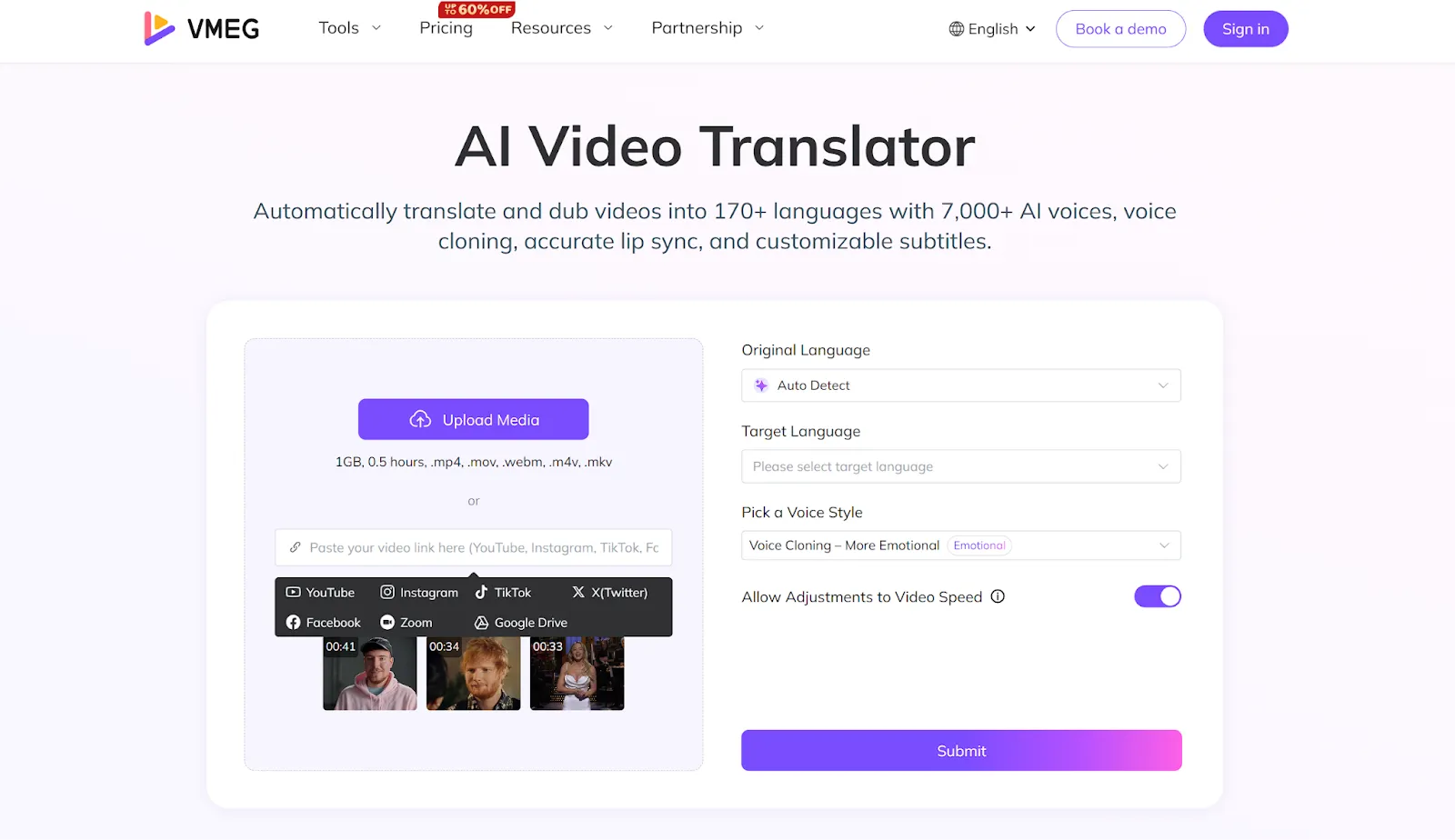
VMEG AI is positioned as a full‑stack video localization platform. By combining translating, dubbing, and lip‑syncing, all the existing videos can be translated into a large number of languages, and none of the original speaker’s tone and timing is lost.
What it does well:
One single workflow combined by VMEG AI, all the automatic transcription, machine translation, and AI voice synthesis into one piece. One of its features, voice cloning, tries not to replace the original voice with a generic narrator but to reproduce the speaker’s vocal identity in the target language. The system is also a multi‑speaker detector, which is handy for interviews, webinars, and panel discussions.
Another strength is lip‑sync alignment. The platform adjusts the generated audio timing so that the translated speech roughly matches mouth movements in the original video. While it is not frame‑perfect in every case, it is usually convincing enough for educational and marketing content.
Best‑fit users and scenarios
- YouTubers and content creators expanding into new language markets
- Online educators translating courses for international learners
- Marketing teams localizing product demos, explainers, and webinars
VMEG AI is best suited for users who care about voice realism and audience experience more than raw speed or minimal cost.
Rask AI — Best for Scalable Translation Workflows
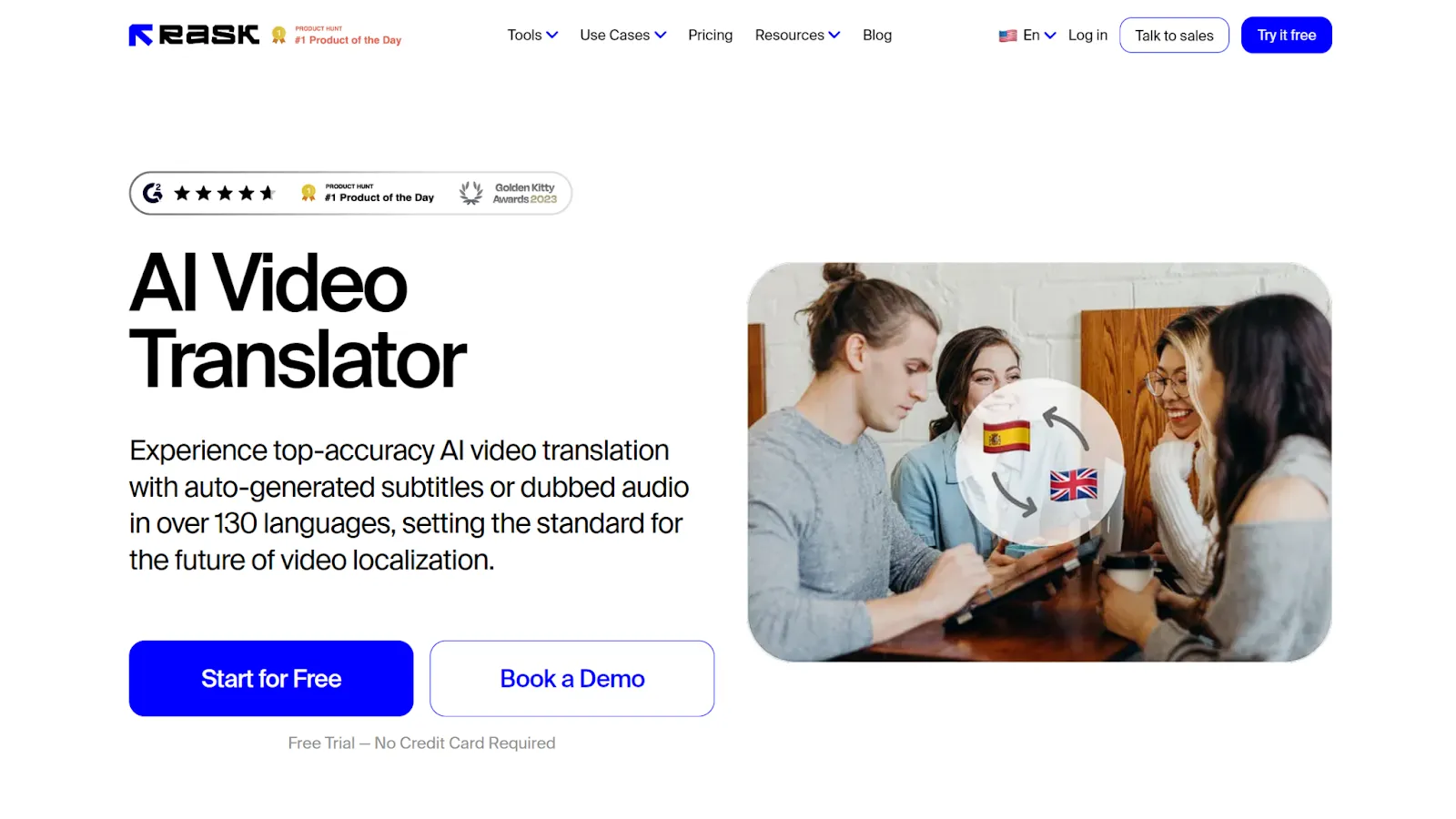
Rask AI is ideal for customers who frequently translate huge amounts of video or audio information and require consistent, repeatable results. It prioritizes volume, automation, and creator-friendly processes.
What it does well:
Rask AI nailed it when is come to dub audio exportation, subtitle creation, automatic transcription, and translation into over 100 languages. Its multi-speaker identification classifies various speakers in the same video and gives them distinct synthetic voices, like you were in a dream.
Rask AI provides batch processing and API access for groups and power users. For stations that release multilingual content on a daily or weekly basis, this makes it appropriate. Rask's output is more practical than programs that concentrate on cinematic realism, but it is reliable and quick.
Best‑fit users and scenarios
- YouTubers and podcasters are publishing frequent multilingual content
- Educational channels localizing lecture recordings
- Media teams that need automation and repeatable workflows
Rask AI is best viewed as a production tool rather than a presentation tool. It prioritizes throughput and reliability over perfect voice realism.
VEED — Best All‑in‑One Editor with Translation Add‑Ons
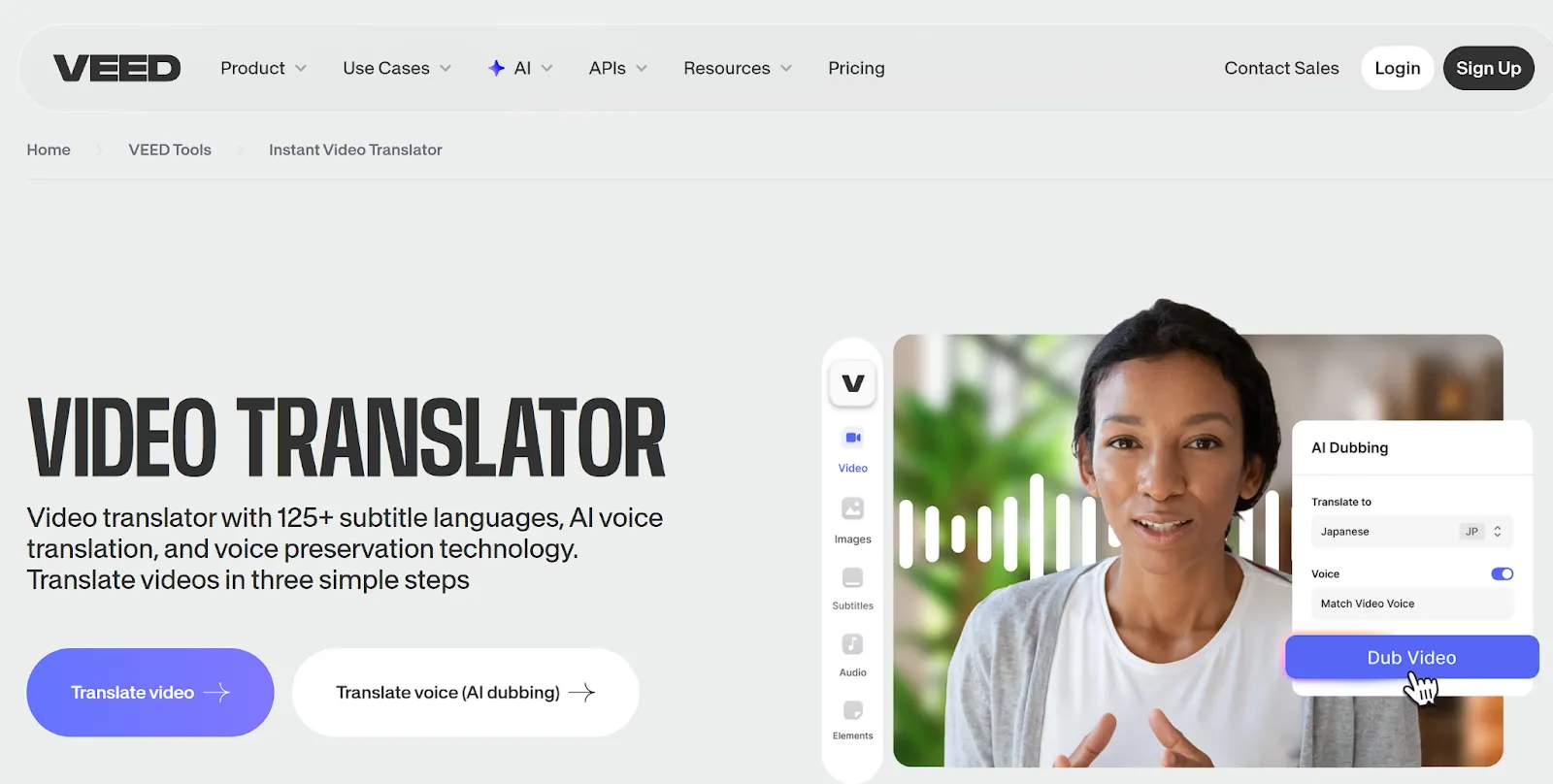
A browser‑based video editor called VEED includes translation and subtitle features and is a part of a broader toolkit. Not start as a dedicated dubbing platform, but it is widely used because it combines editing and localization in one place.
What it does well:
Offering automatic subtitles, subtitle translation, basic voiceover tools, and timeline‑based video editing, VEED is a legendary tool. For creators who already see VEED as a lifesaver to do clips, add captions, or apply branding, the translation features are a convenient extension of an existing workflow.
For subtitles and simple voiceovers, the quality is acceptable, but it does not offer the same depth of voice cloning or lip‑sync accuracy as specialized tools like VMEG AI or HeyGen.
Best‑fit users and scenarios
- Social media creators producing short‑form videos
- Solo editors who want everything in one browser‑based tool
- Teams that prioritize speed and convenience over dubbing realism
VEED is best understood as an editor first and a translator second.
HeyGen — Best for Maximum Language Reach and Natural Lip‑Sync
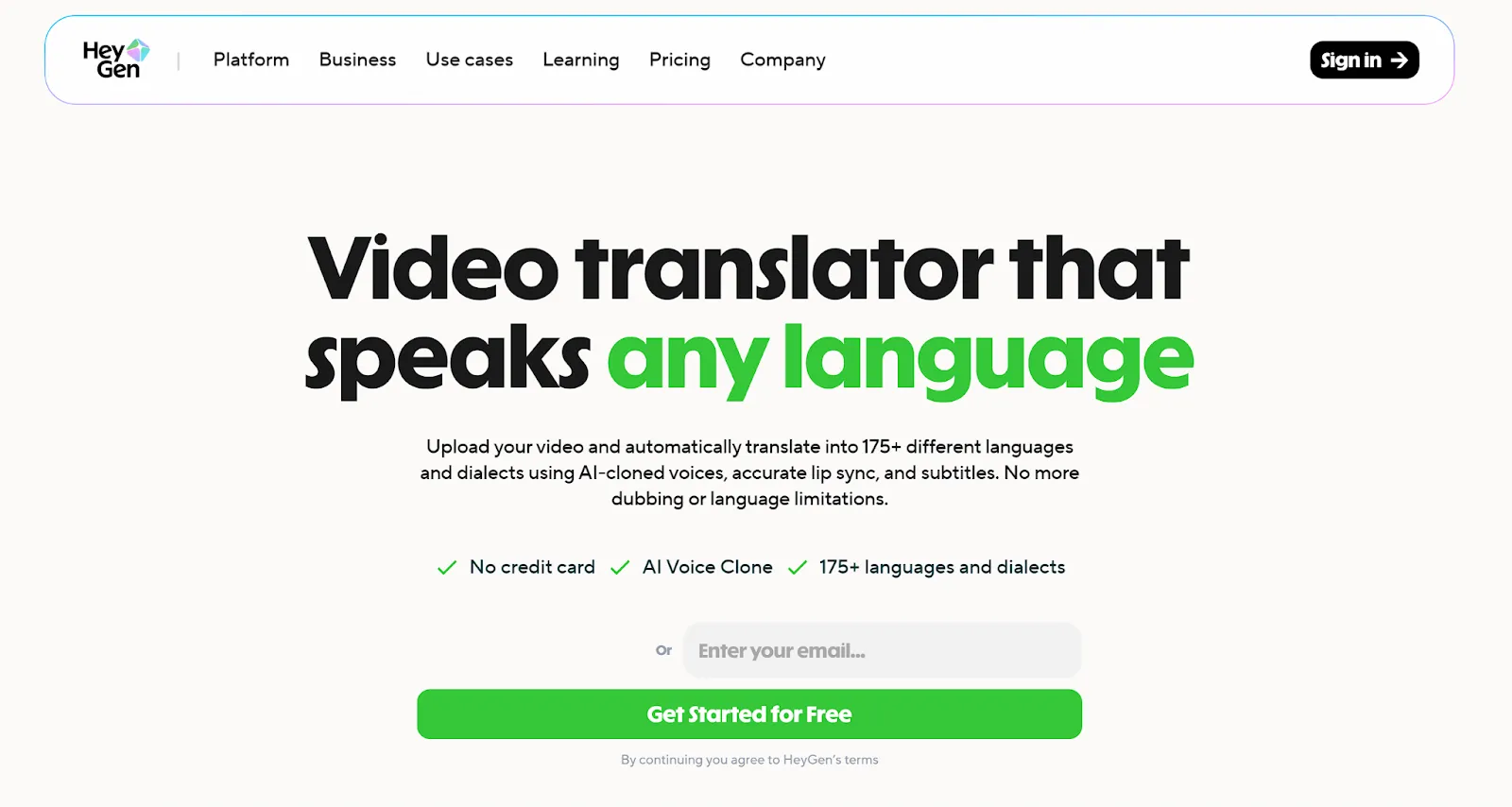
HeyGen is known for its broad language coverage and visually convincing lip‑sync. It sits between creator‑friendly tools and enterprise‑grade platforms.
What it does well:
Great translation and dubbing, which can help your work into a very large number of languages and dialects. Its lip‑sync engine makes facial movements match translated speech more closely than its rivals, which improves perceived realism.
Besides all that, HeyGen is also an AI video creation platform. Using avatars and scripts, users can generate entirely new videos, then localize those videos into other languages in the same system.
Best‑fit users and scenarios
- Global marketing teams running multilingual campaigns
- Creators targeting audiences in many countries at once
- Companies that want both translation and AI‑generated video
HeyGen is most useful when language breadth and visual realism matter more than fine‑grained editing control.
Synthesia — Best for Professional and Branded Content
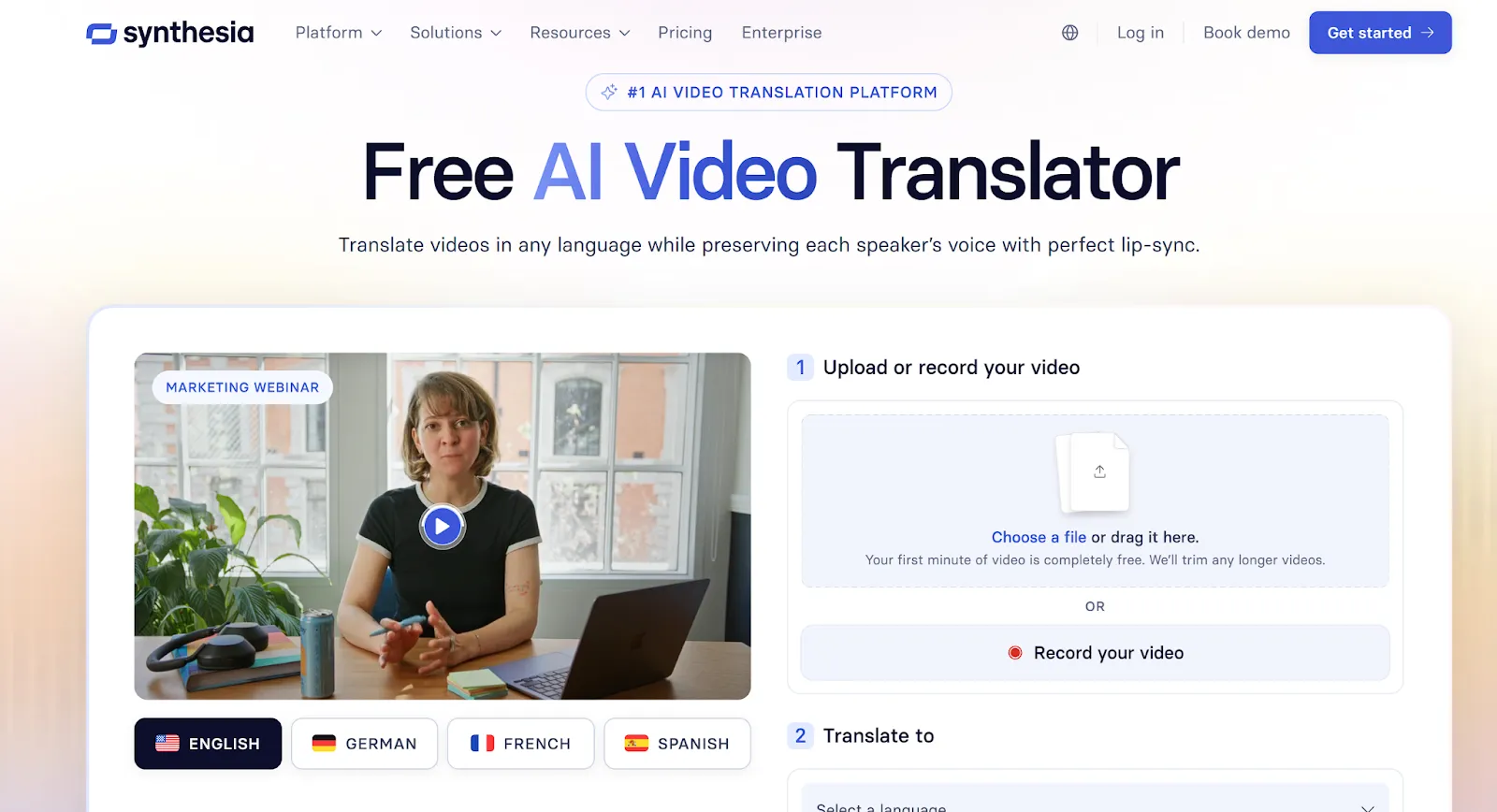
Synthesia is positioned as an enterprise‑oriented AI video platform. While it is widely known for AI avatars, it also offers multilingual dubbing and subtitle features.
What it does well:
With consistent on-screen presenters, Synthesia enables users to produce or translate videos. Because of this, it is particularly helpful for internal communications, onboarding, and corporate training. For presentation-style videos, its lip-sync is usually dependable, and its speech synthesis is smooth and steady.
Synthesia is less adaptable for extremely dynamic or casual material like vlogs or podcasts since it places a strong emphasis on brand integrity and visual uniformity.
Best‑fit users and scenarios
- Learning and development teams
- Corporate communications departments
- SaaS companies producing training and onboarding videos
Synthesia is best suited for structured, professional content rather than creative or conversational video.
Maestra AI — Best for Subtitles‑First Translation and Accessibility
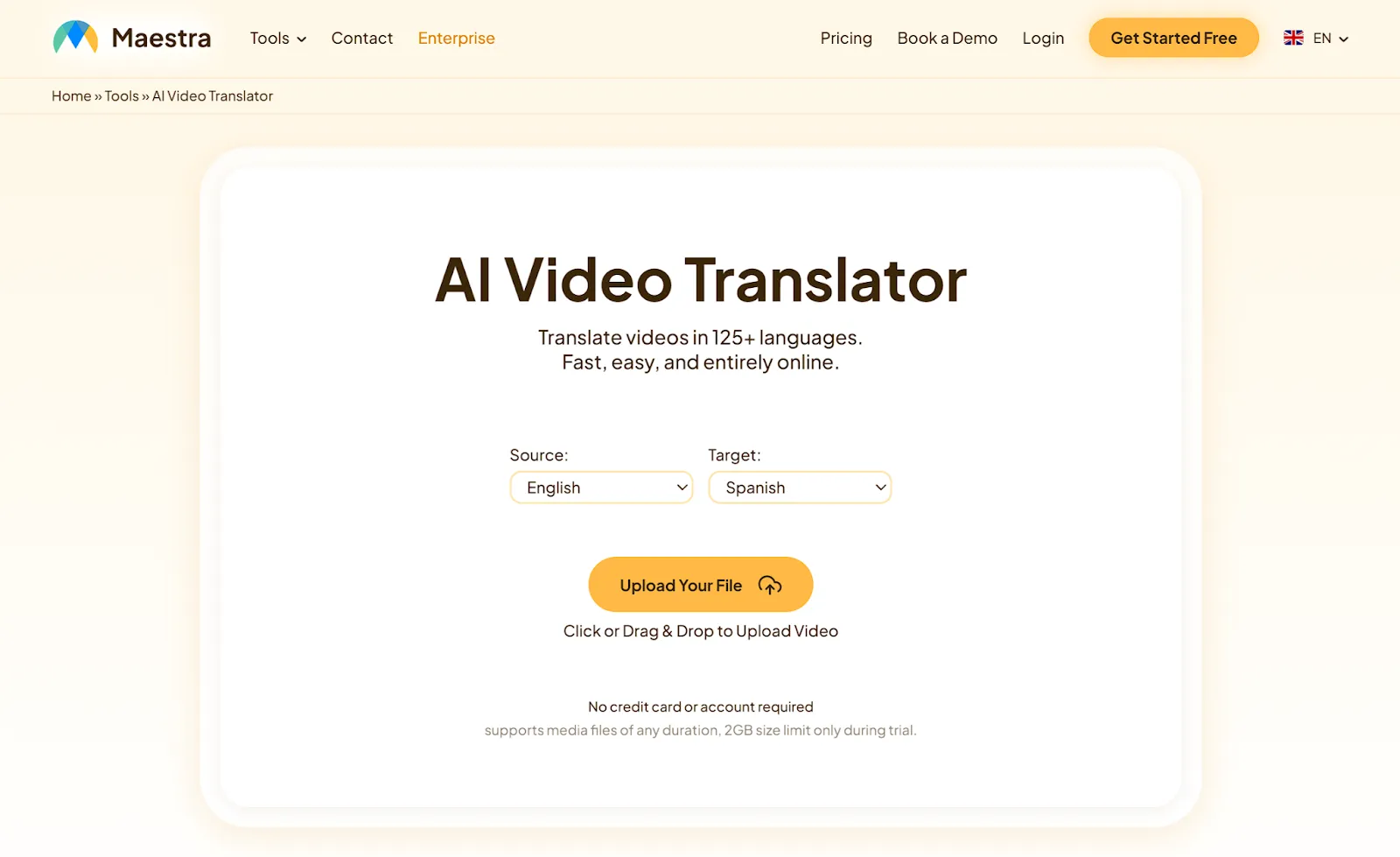
Maestra AI is positioned as a practical, accessibility‑focused video translation platform. It emphasizes automatic subtitles, multilingual captioning, and fast voiceover generation rather than cinematic dubbing realism.
What it does well:
Maestra AI offers automated transcription, subtitle translation, and AI voiceover synthesis for videos in dozens of languages. Its process is centered on text: users create correct captions, translate them into target languages, and can optionally turn them into synthesized speech.
One significant strength is accessibility support. Maestra AI is commonly used to create multilingual subtitles for educational content, webinars, and public-facing films where intelligibility and compliance are more important than voice identification. It also provides output formats that work with common video players and LMS systems.
Unlike VMEG AI or HeyGen, Maestra AI does not prioritize voice cloning or lip-sync realism. Instead, it focuses on speed, subtitle correctness, and convenience of usage.
Best‑fit users and scenarios
- Educators producing multilingual lecture videos
- Webinar hosts and conference organizers
- Organizations focused on accessibility and compliance
- Teams that mainly need subtitles with optional voiceovers
Maestra AI is best suited for projects where subtitles are the primary localization layer and dubbing is optional.
AI Video Translator Comparison Table
| Tool | Primary Strength | Voice Cloning | Lip‑Sync Quality | Best For |
|---|---|---|---|---|
| VMEG AI | Voice realism and localization | Strong | Strong | Creators, educators, marketers |
| Rask AI | Workflow automation | Moderate | Moderate | High‑volume content teams |
| VEED | All‑in‑one editing | Basic | Basic | Social media creators |
| HeyGen | Language breadth and realism | Strong | Very good | Global campaigns |
| Synthesia | Branded presentation video | Strong | Very good | Corporate and training content |
| Maestra AI | Subtitles and accessibility | Basic | Not a focus | Education, webinars, accessibility |
Conclusion
AI video translation in 2026 is no longer only on paper. For many types of content, it is now a great way and a quicker way to localize video for international audiences.
Each of the tools reviewed here serves a different purpose:
- VMEG AI focuses on voice fidelity and high‑quality localization.
- Rask AI prioritizes scale and automation.
- VEED integrates translation into a general editing workflow.
- HeyGen emphasizes language coverage and lip‑sync realism.
- Synthesia targets professional, branded video use cases.
The right choice is made not by headline features but by workflow needs, audience expectations, and content type. In our daily life, many teams test two or three tools on a short clip before committing to one platform.
FAQs on AI Video Translators in 2026
What is an AI video translator?
Mixing speech recognition, machine translation, and AI voice synthesis together, an AI video translator can help convert spoken content in a video into other languages just like that. Most platforms can finish missions like generating subtitles, dubbing audio, or both, and some also help lip movements to match the translated speech better.
How accurate are AI video translators in 2026?
Accuracy is higher than ever in recent years. For major language pairs, subtitle translations often come with high quality, and AI dubbing is generally suitable for work in education, marketing, and internal content. However, it will still need some manual review for legal, medical, or highly sensitive material anyway.
What is the difference between subtitles and AI dubbing?
Subtitles display translated text on screen, while AI dubbing replaces or overlays the original audio with synthesized speech in another language. Subtitles are faster and cheaper to produce, while dubbing provides a more immersive viewing experience for audiences who prefer listening rather than reading.